GIDS news media, articles, insights and virtual events educate and illuminate its audiences so they can be fully prepared to deal with the new realities at work and in their professions.
Earned Behavior: An Engineering Discipline for Agent Experience
Thu, December 10Agents, Context & ExecutionProduction AI Systems
Most discussions about AI agents focus on how they reason, plan, and call tools. Far less attention is given to what happens after an agent succeeds. In many production systems, successful investigations, workflows, and execution paths disappear once they have completed, forcing future agents to rediscover the same solutions. That rediscovery increases latency, consumes additional tokens, and creates new opportunities for previously solved problems to fail again.
This session argues that capturing operational experience is becoming a production engineering discipline in its own right, similar to how caching, observability, and schema migration evolved into engineering disciplines rather than framework features. The talk examines the questions that arise when teams begin treating successful agent behaviour as something that can be captured, reused, and managed over time.
Four questions frame the discussion. Which successful behaviours are worth capturing, and why is capturing everything as problematic as capturing nothing? When should an agent reason from first principles instead of replaying a previously successful path? How does a captured behaviour earn trust as a verifiable contract rather than simply a stored transcript? And how should a growing library of captured behaviours be versioned, governed, observed, and eventually retired as the environment changes?
The session focuses on the engineering challenges of managing operational experience throughout its lifecycle, treating captured behaviours as evolving assets that require validation, governance, and ongoing maintenance rather than static records of past execution.
What You Will Learn:
How to evaluate which successful agent behaviours should be captured and reused
The trade-offs between first-principles reasoning and replaying previously successful execution paths
Considerations for validating, versioning, governing, observing, and retiring captured behaviours over time
Who Should Attend:
AI engineers
Platform engineers
Staff and principal engineers
Software architects
Technical leads building agent systems
Teams operating production AI workflows
Engineers interested in long-term management of agent behaviour
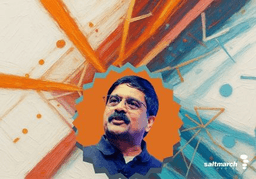
Chetan Conikee is the founder and CEO of Modiqo, where he works on infrastructure for AI agents. He is a four-time founder with three prior exits — CashEdge (acquired by Fiserv), Business Signatures (Entrust), and Qwiet AI (Harness) — and has spent more than two decades building protocol and security infrastructure, from financial messaging systems like SWIFT, ACH, and FIX to hypervisors and application security platforms. His current work focuses on how agent systems capture, verify, and reuse operational experience instead of rediscovering it. He writes regularly on agent infrastructure, information theory, and the engineering of complex systems at conikeec.substack.com, drawing on interests that range from category theory and cognitive neuroscience to the economics of computation. He is based in Sunnyvale, California.