GIDS news media, articles, insights and virtual events educate and illuminate its audiences so they can be fully prepared to deal with the new realities at work and in their professions.
When AI Tests, Systems, and Specifications Disagree
Thu, December 10AI-Native Applications & Product SystemsProduction AI SystemsTrust, Security & Governance
When the same AI influences both code and tests, a green build is no longer sufficient evidence that software is correct. The code and its tests can reinforce the same misunderstanding, while coverage dashboards measure activity rather than demonstrating that business requirements have been satisfied.
This session examines a production verification architecture built around a probabilistic proposer, a deterministic verifier, graded evidence, and a computed release verdict.
At the centre is a Git-versioned rulebook containing executable business rules written in plain language, approved by the person responsible for the requirement, and reviewed as decision tables. The rulebook computes expected results, allows product owners to examine behaviour before implementation, and connects every verification run to its underlying requirement.
An LLM-driven agent explores the system, identifies uncovered scenarios, and drafts candidate rules and tests. A separate deterministic verification layer, with no model in the verdict path, compares those claims with the approved rules and observed system behaviour. It produces an evidence graph and a release verdict of READY, CONDITIONAL, or NOT READY, highlighting unresolved discrepancies.
The session opens with a live insurance-rating example. An AI-generated test expects one premium, a locally running Guidewire PolicyCenter instance returns another, and an actuary-approved executable rule computes a third. Attendees will see how this evidence helps engineering, QA, and business teams investigate the disagreement and determine which artifact requires correction. The demonstration also examines a more difficult case in which the approved rule itself has become stale.
Although insurance provides the primary case study, the verification architecture applies wherever AI-generated software must implement evolving business rules.
What You Will Learn:
Why AI generation and verification require independent systems
How executable rules, graded evidence, and deterministic verdicts support requirement-level assurance
Why operation coverage, self-grading agents, and snapshot assertions can create false confidence
How to investigate disagreements between generated tests, system behaviour, and business specifications
Who Should Attend:
Staff and principal engineers
Software and solution architects
AI and platform engineers
Test and quality engineering leaders
SREs and MLOps practitioners
Technical leaders responsible for AI-assisted software delivery
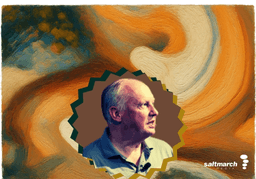
Peter Thomas is CTO, Co-Founder of Karate Labs and the original creator of the Karate open-source framework adopted by 650+ companies including 76 of the Fortune 500, with over two million monthly downloads and 8,800+ GitHub stars. Karate is featured in the Gartner Market Guide for API & MCP Testing Tools (March 2026) and is embedded as the foundation of Guidewire’s own API testing framework, making Karate Labs Guidewire’s first and sole testing technology partner.
His current work is Karate Agent, an AI-native verification platform built on the architecture this talk teaches: an LLM-driven agent explores systems and drafts tests and candidate business rules, while a deterministic verification layer (with no model in the decision path) grades every claim against product-owner-approved rules and computes a ship verdict with requirement-level traceability. The platform is self-hosted and BYO-LLM by design, and runs in production across banking, insurance, and financial services.
Peter speaks internationally on test architecture, API design, and the engineering of trustworthy agentic systems.