GIDS news media, articles, insights and virtual events educate and illuminate its audiences so they can be fully prepared to deal with the new realities at work and in their professions.
Designing Agentic Architecture for AI-Native Systems
Wed, December 9AI-Native Applications & Product SystemsAgents, Context & Execution
Most software architectures assume that system behaviour is largely determined before deployment. Agentic systems challenge that assumption. When reasoning, tool selection, planning, delegation, recovery, and coordination happen at runtime, software teams must decide which decisions should remain deterministic and which decisions should become part of an adaptive agent runtime.
Many agent projects begin with an impressive demonstration in which a model follows instructions, invokes tools, and completes a task. Once that capability becomes part of a production system, however, the engineering challenge changes. Teams must determine which behaviour belongs in application code, which requires an agent loop, which decisions should occur at runtime, and how the surrounding harness should constrain, observe, and guide the system.
This session explores the architectural layer between a business requirement and a production-ready agentic system. We will examine how to translate business requirements into workflows, execution loops, tools, context boundaries, handoffs, evaluation points, and failure-handling paths without creating brittle chains of prompts, rules, and hard-coded orchestration logic that become increasingly difficult to evolve.
The focus is not on a particular framework or vendor, but on the architectural decisions that determine whether agentic systems remain understandable, adaptable, and operable as requirements, tools, data, and failure modes change. Attendees will leave with a practical framework for deciding where control should reside, what belongs in application code versus the agent runtime, when static orchestration is sufficient, and when the architecture must evolve to support more adaptive execution.
What You Will Learn:
How to translate business requirements into agentic workflows, execution loops, context boundaries, and failure-handling paths
How to determine which behaviour belongs in application code, runtime execution, and agent loops
A practical architectural framework for designing intelligent systems that remain adaptable and operable as they evolve
Who Should Attend:
Software architects
Software engineers
AI engineers
Technical leads
Staff and principal engineers
Platform engineers
Engineering managers designing intelligent systems
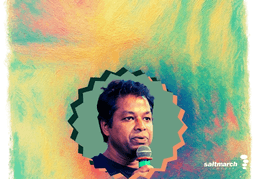
Nicole Koenigstein is an AI Researcher and Practitioner in Agentic Systems, working across research, consulting, teaching, and direct system implementation to build reliable, production-ready AI systems. Her work focuses on multi-agent architectures, evaluation, safety, and long-term system behavior.
She served as an external evaluator for a European Commission AI Grand Challenge and has advised IOSCO on generative AI in regulated environments. She also serves on advisory boards for leading AI and quantitative finance conferences. Nicole regularly delivers invited talks and technical workshops across academia, industry, and international events. She is the author of Math for Machine Learning and Transformers in Action with Manning Publications. Her books Transformers: The Definitive Guide: Applications Beyond NLP and AI Agents: The Definitive Guide have been published by O’Reilly Media, and her forthcoming book Harness Engineering for AI Agents will also be published by O’Reilly Media.